
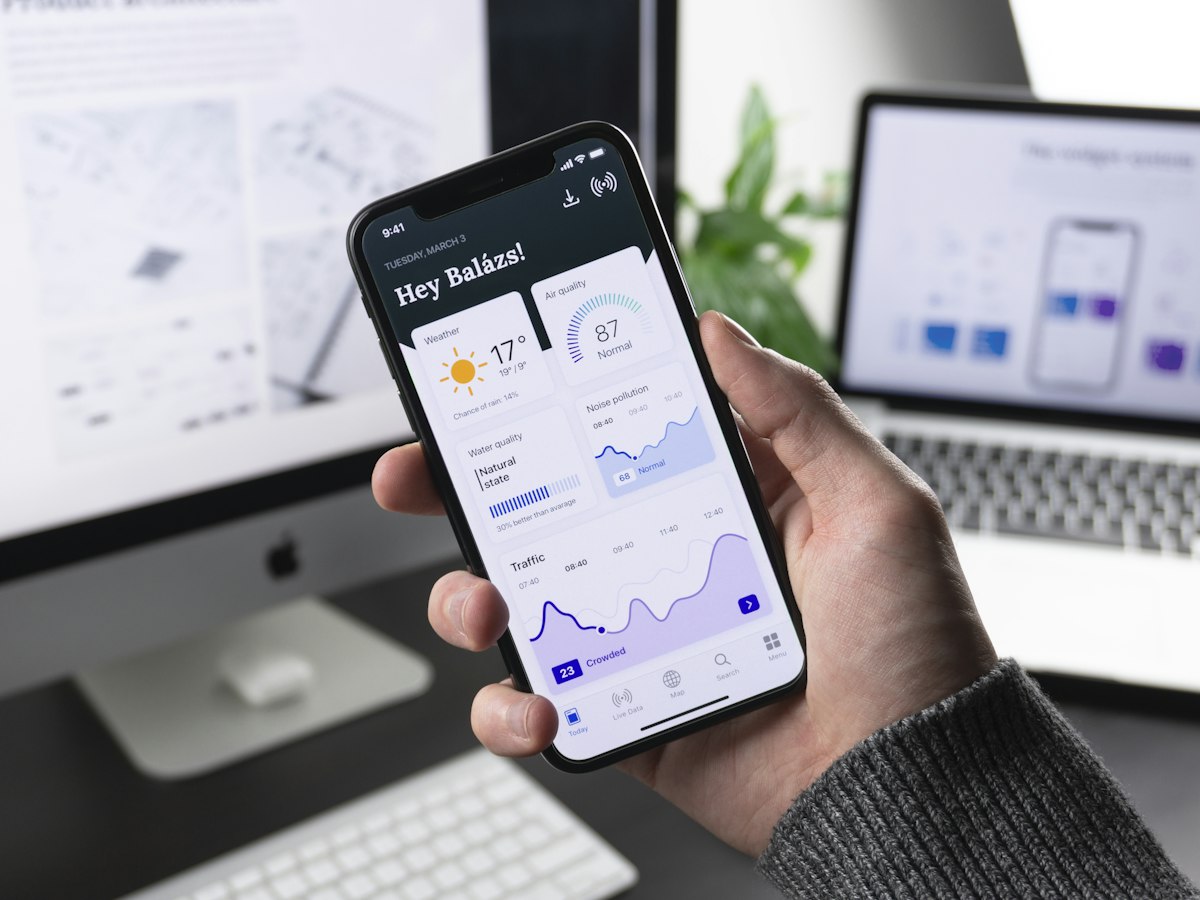
There’s a moment in most product development projects where the client sees the app working for the first time and thinks: we’re nearly done.
We’ve learned to treat this moment carefully. Because the gap between “working” and “shipped” is where most timelines expand, most budgets stretch, and most frustration accumulates — on both sides.
What “Working” Means vs. What “Shipped” Means
A working app performs its core function correctly in a controlled environment. A shipped app performs correctly in every environment a real user brings to it — different devices, different OS versions, different network conditions, different accessibility settings, different use patterns no one anticipated.
The path from the first to the second is not a straight line.
For B2B apps specifically, the stakes are different than consumer apps. Your users aren’t choosing to use your product — they’re required to. That changes the nature of quality. A frustrating consumer app loses users. A frustrating enterprise app loses employee time, generates support tickets, and reflects on the IT decision that recommended it.
The App Store as a Quality Gate
Apple’s review process is sometimes perceived as an obstacle. We’ve come to see it differently: it’s an external quality gate that catches issues we might have normalized.
We’ve had reviews that flagged edge cases in network handling we hadn’t adequately tested. Reviews that pointed to accessibility issues in interaction targets. Reviews that required us to revisit how we described data usage.
Every one of those reviews produced a better product. The friction of the process is a feature.
For clients, this reframes the submission timeline. “App Store review” isn’t a waiting period at the end of development — it’s a testing phase that runs in parallel with your internal QA. Building that time into the project plan rather than treating it as a surprise at the end changes how the whole project feels.
What We Do Differently
We start App Store preparation much earlier than most teams. Metadata, screenshots, and store listing copy are drafted when the feature set stabilizes — not after development finishes. App Store Connect configuration is set up at project kickoff, not in the final week.
This matters because App Store preparation requires decisions: who owns the developer account, what markets do you want to launch in, what age rating applies, how do you handle data privacy disclosures. These decisions involve legal, marketing, and leadership. They take time if they’re not anticipated.
Surfacing them early means they don’t block launch.
On Scoping and Honesty
The most useful thing we do for B2B clients is a scope conversation early in the engagement — not about features, but about what “done” actually means for them.
Done might mean: internal pilot with 20 users. Done might mean: 500 enterprise seats across three countries. Done might mean: public App Store listing with a 4-star review average within 90 days.
Each of those “dones” implies a different level of polish, testing, and App Store investment. Understanding which one you’re building toward shapes every decision along the way.
We ask this question at the start of every project. The answer is always worth knowing.